Arda Altintepe
I am a freshman studying Computer Science at Cornell University (Class of 2030).
My research focuses on machine learning applied to clinical cardiology — specifically using ECG signals to build predictive and diagnostic models for cardiac conditions. I have published two first-author papers on ECG-based classification and deep learning for emergency department triage.
I did this work while a student at Horace Mann School in New York, collaborating with researchers at Princeton University and Emory University.
Research
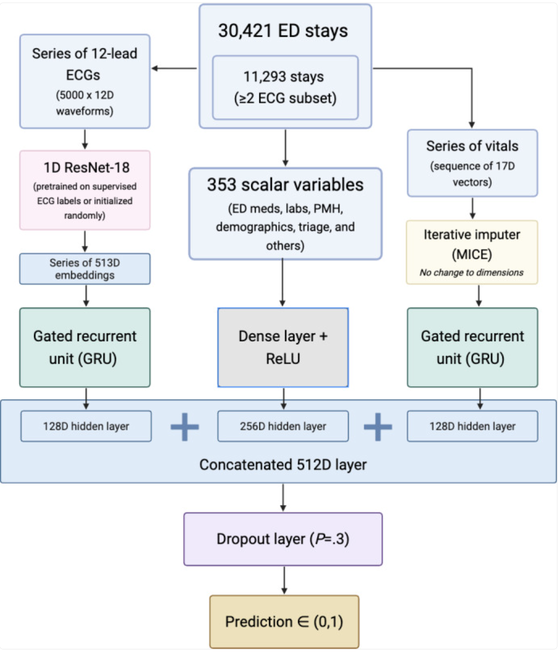
Serial 12-Lead ECG–Based Deep-Learning Model for Hospital Admission Prediction
in Emergency Department Cardiac Presentations
JMIR Cardio, 2025
We built a multimodal deep-learning model that fuses serial 12-lead ECG waveforms,
sequential vital signs, and 353 static clinical features
to predict hospital admission for ED patients presenting with cardiac symptoms.
The model was trained and evaluated on 30,421 patients across the MIMIC-IV databases.
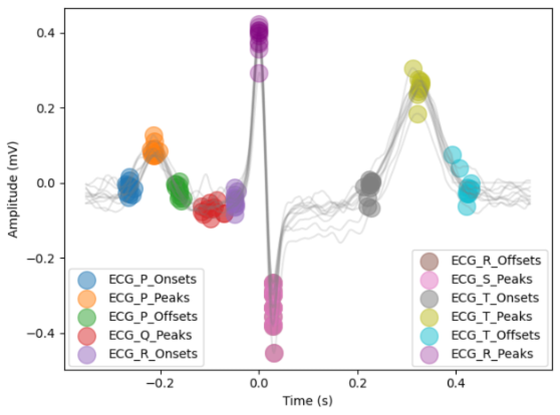
An Open-Source Analysis of Cardiomyopathy Using Machine Learning and Electrocardiograms
Diagnostics, 2026 · cover article, Vol. 16, Issue 5
We developed the first fully open-source ECG-based pipeline for cardiomyopathy
classification, distinguishing hypertrophic and dilated cardiomyopathy subtypes using standard ECG
and 3D vectorcardiogram (VCG) features derived from open data.
Projects
Co-founder, 2026 – present
A K-12 assignment and assessment platform that lets teachers set the boundaries
for AI use in their assignments: an AI tutor with configurable help levels, an
assignment builder with auto-grading, and a signed desktop lockdown app (Mac and
Windows) for in-class tests. Integrates with Google Classroom, Canvas, and other LMSs.
Founder, 2023 – present
A debate-practice platform where students run full Public Forum practice rounds
against an AI that listens with speech recognition, takes notes, and gives speeches.
Used by 10,000+ debaters worldwide.